Style Finder and Style Match
One brief through five image models, and one reference image into four matching vehicles — 43.98 cr and 54.88 cr, committed into a Unity project.
- Style Finder, one run
- 43.98 cr
- Style Match, one run
- 54.88 cr
- delivery commits across both
- 17
- Style Finder model step time
- ~2 min
What the run had to answer.
Two workflows for the first hour of a project, when the look is not settled yet.
Style Finder runs one brief through five image models at once, so the choice is made by looking. Style Match starts from one image you already like and makes more things in its style. Both finish by committing the results into a Unity project.
Every step, every model, every charge.
Style Finder — one brief, five looks
Five lanes run the same brief side by side. Three lanes go on to a 3D mesh; the pixel lanes stop at the sprite, which is the asset. A sixth lane writes and speaks one line in the character's voice.
A hooded ranger with a longbow and a wolf-pelt cloak, full body, single character, game asset, neutral background.
Steps
Lane A — concept art
Image, then a 3D mesh.
FLUX.1 [dev] on Fal → Trellis on Fal
Lane B — isolated game asset
Image, then a 3D mesh.
FLUX game-asset 2D LoRA on Fal → Trellis
Lane C — pixel sprite, 128 px
The sprite is the asset.
Retro Diffusion on Replicate
Lane D — isometric pixel sprite
The sprite is the asset.
Retro Diffusion on Replicate
Lane E — grayscale concept
Image, then a 3D mesh.
SDXL on Replicate → Trellis
Voice
A line in the character's voice: Claude writes it, ElevenLabs speaks it.
Claude → ElevenLabs
Delivery
Each output committed into the Unity project by the workflow's own delivery step.
What each step was charged
| Step | cr |
|---|---|
| Lane A — concept + meshFLUX.1 [dev], Trellis | 13.65 |
| Lane B — isolated + meshFLUX game-asset 2D LoRA, Trellis | 14.95 |
| Lane C — pixel spriteRetro Diffusion | 1.30 |
| Lane D — isometric spriteRetro Diffusion | 3.31 |
| Lane E — grayscale + meshSDXL, Trellis | 10.60 |
| Voice lineClaude, ElevenLabs | 0.17 |
| Total, one run | 43.98 |
Five images, three meshes and one spoken line — “The wild calls to those brave enough to answer it.” — in nine commits. The model steps took about two minutes between them, not counting the commits.
The five looks, as they came off the run
AI-generated, as the run returned them.
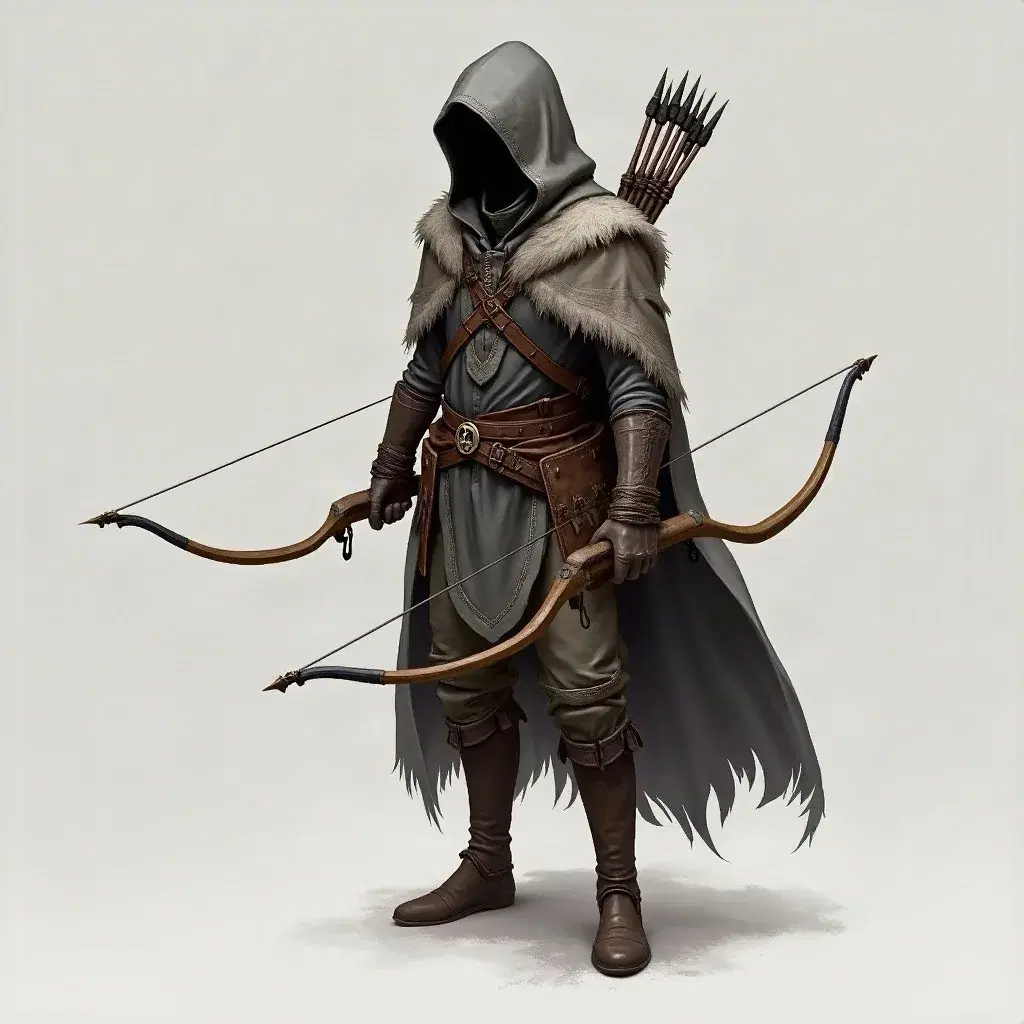
A · concept art — FLUX.1 [dev] 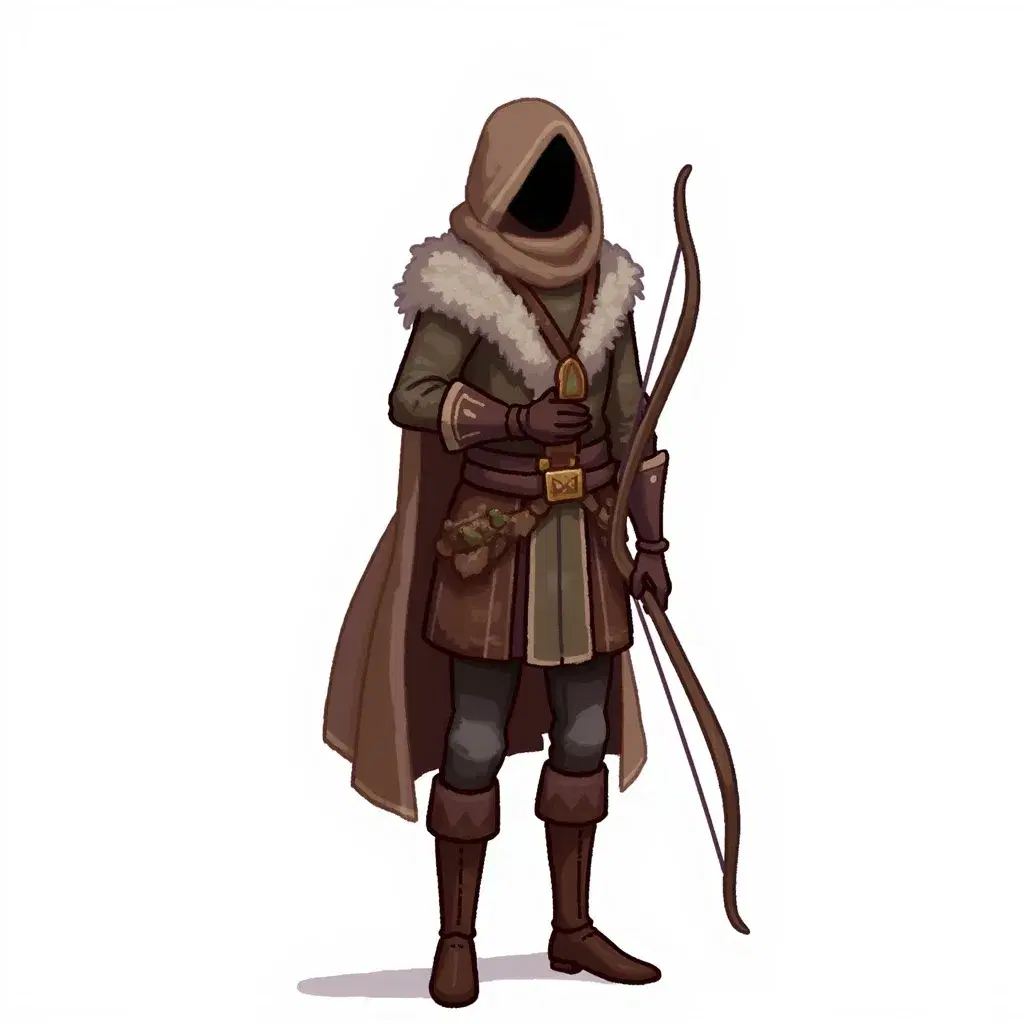
B · isolated game asset — FLUX game-asset 2D LoRA 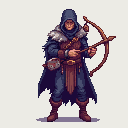
C · pixel sprite, 128 px — Retro Diffusion 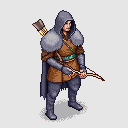
D · isometric pixel sprite — Retro Diffusion 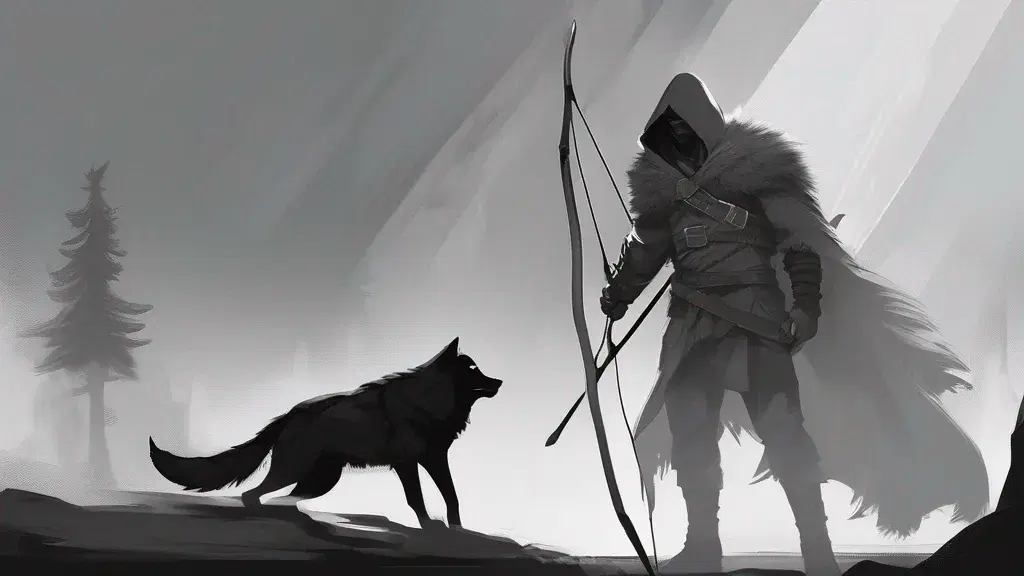
E · grayscale concept — SDXL. A scene, not an object: the honest failure case.
Style Match — one reference, four vehicles
The input is a single image: here, a toy dune buggy taken from Sushibelt's own Discover page.
Steps
Describe how it is drawn
Claude looks at the reference and describes how it is drawn, not what it shows — palette, lighting, finish, camera angle.
Claude
Write four prompts
That style put onto four new subjects: a rally hatchback, a panel van, a monster truck and a 1930s hot rod.
Claude
Make each image
One image per vehicle.
FLUX.1 [dev] on Fal
Make each mesh
One 3D mesh per vehicle.
Trellis on Fal
Delivery
Eight commits — an image and a mesh per vehicle — land in the Unity project.
What each step was charged
| Step | cr |
|---|---|
| Shared look at the reference, onceClaude | 0.12 |
| Prompt, per vehicleClaude | 0.04 |
| Image, per vehicleFLUX.1 [dev] on Fal | 3.25 |
| Mesh, per vehicleTrellis on Fal | 10.40 |
| Four vehicles, one run | 54.88 |
The template estimates roughly 55 cr a run. The run was charged 54.88.
The reference, and what came back
AI-generated, as the run returned them. Three of the four vehicles are shown here.
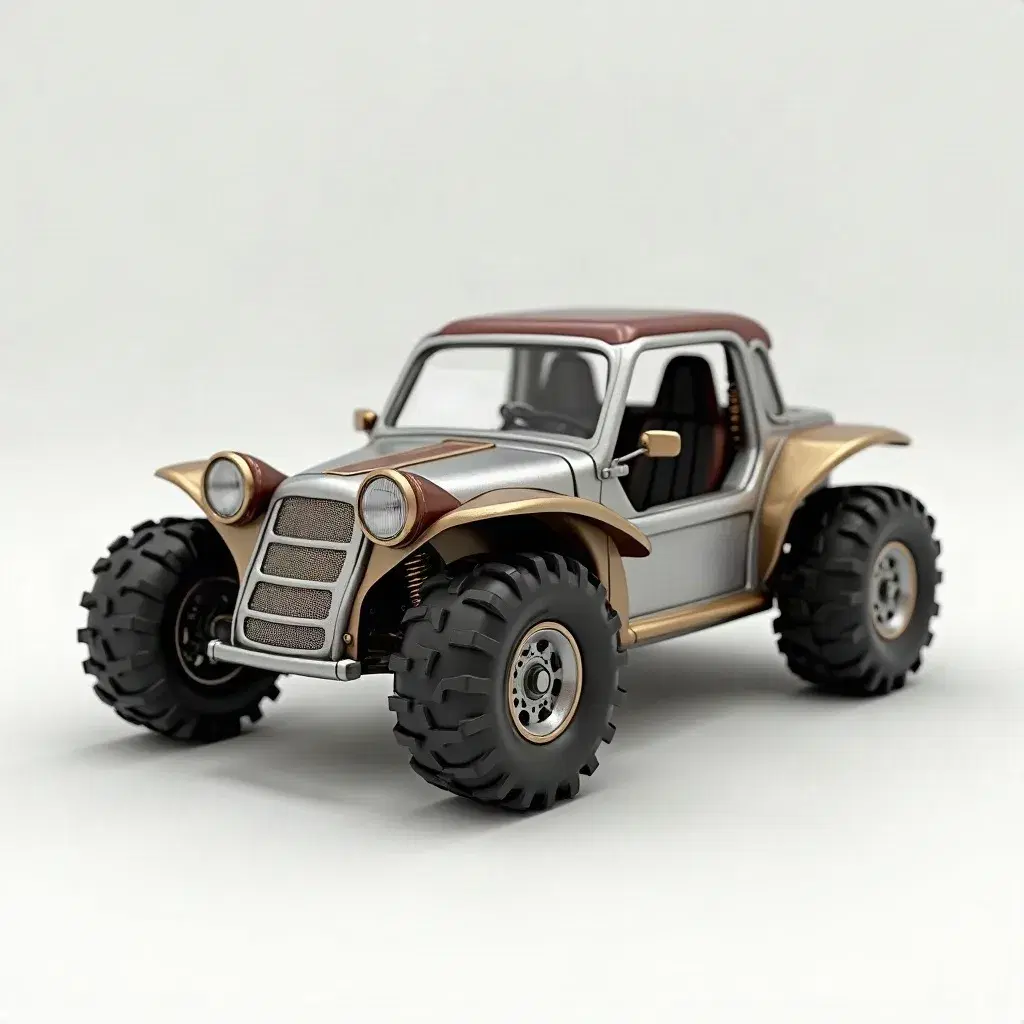
The reference — a toy dune buggy from Discover 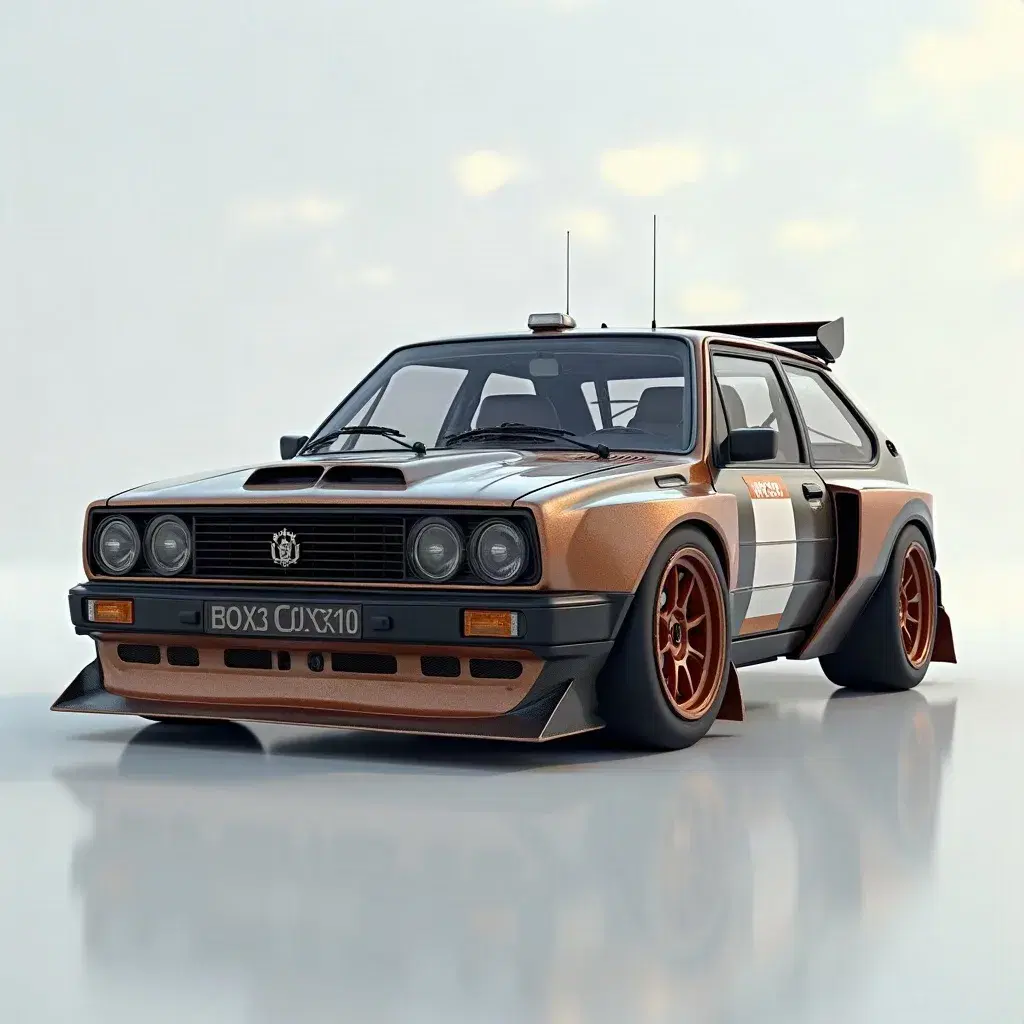
Rally hatchback 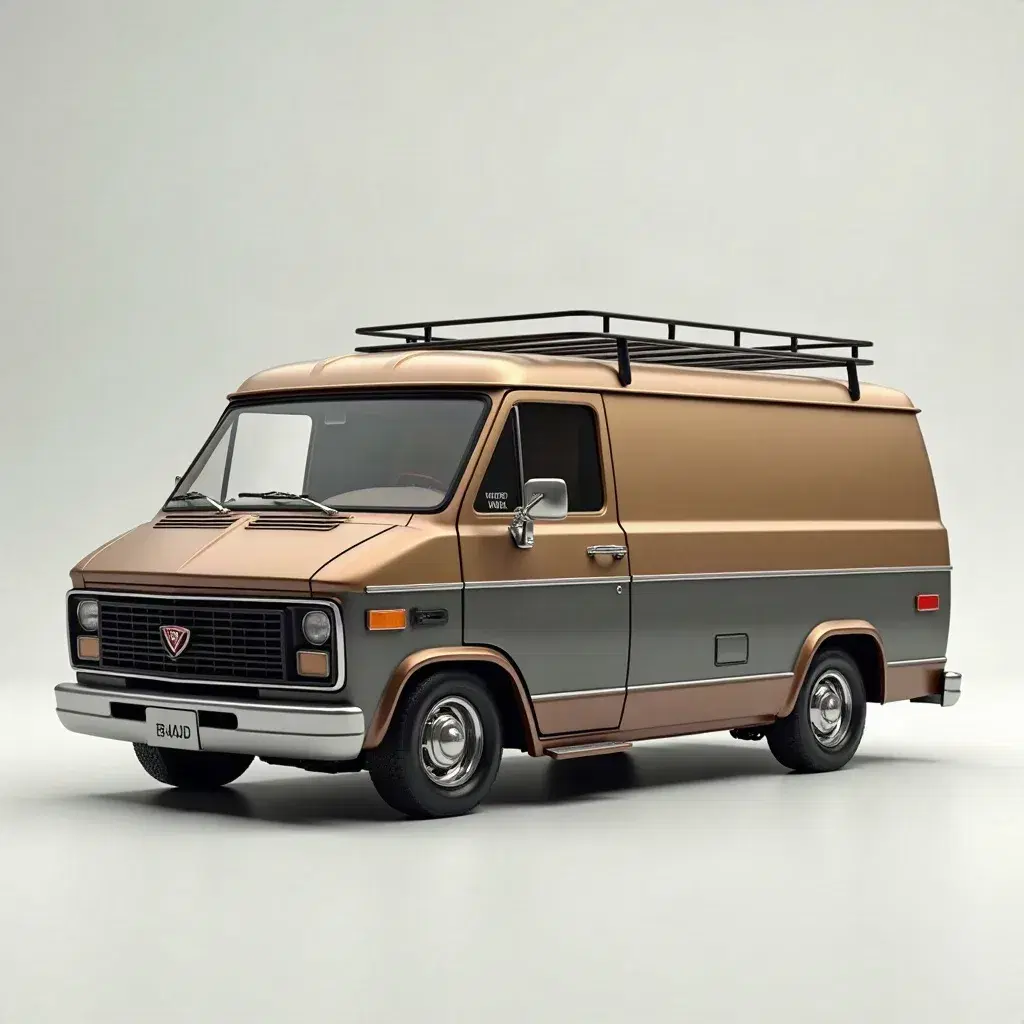
Panel van 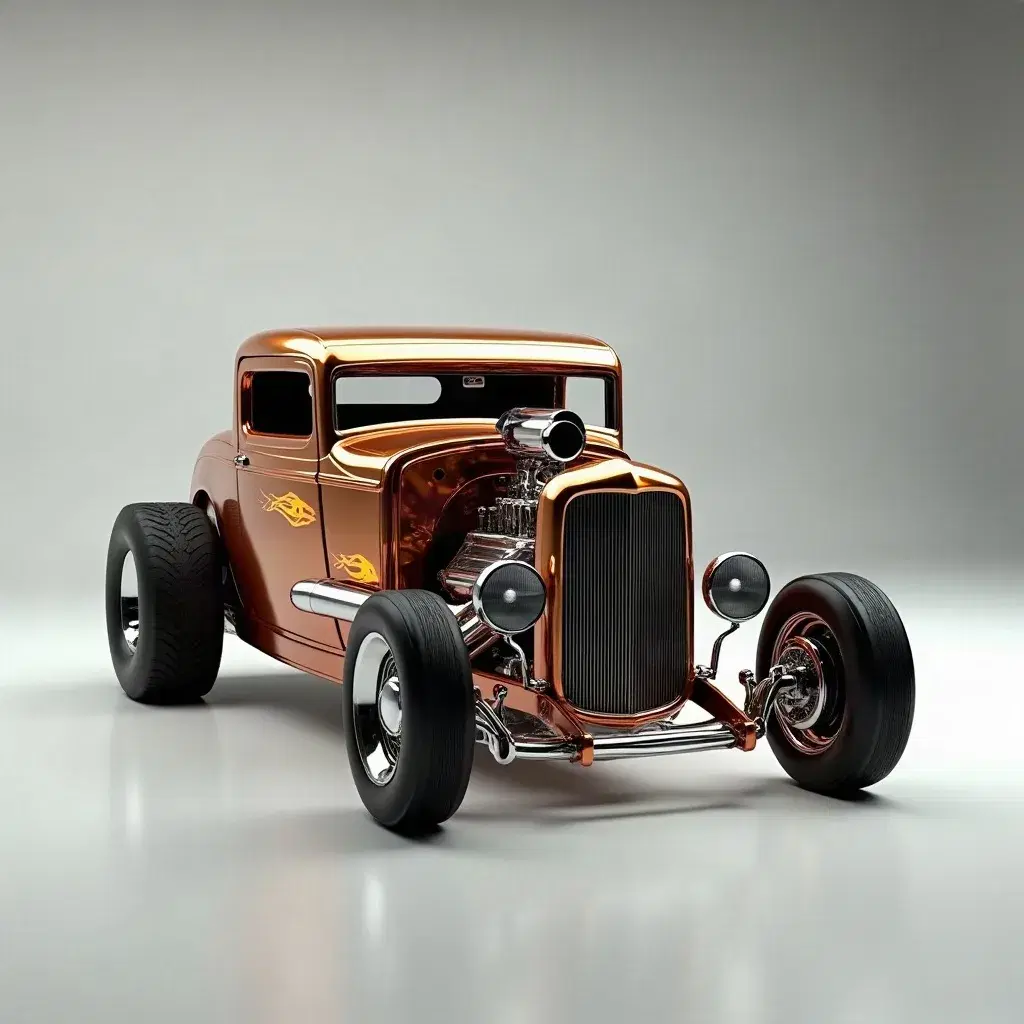
1930s hot rod
What came off the two runs
- Style Finder: five images in five looks, three 3D meshes and one spoken line
- Style Match: four vehicle images and four 3D meshes in the reference's palette, finish and camera angle
- Seventeen commits into a private Unity project, made by the workflows' own delivery steps — nothing hand-placed
Said plainly.
- Style Match matches the words, not the image. There is no image-conditioned style transfer, so the style travels as a description. The reference was a die-cast toy; the description never said “toy”, and the four vehicles came out full-size and photoreal. What the description does not name, the siblings do not keep.
- Lane E made a scene, not an object. The grayscale preset drew the ranger with a wolf, trees and sky, so its mesh is a lump of scenery — weak by construction, and kept as the honest failure case.
- One run each. Both prove the chain from brief to commit, not the quality across many briefs.
- Three earlier attempts failed on bugs fixed the same day. All five runs together cost about 142 cr.
Put your own brief on the line.
Both are public starter templates. Point the delivery step at your own repository first — it ships with a placeholder. Request an invite to run Style Finder on your own brief.
← All case studies